The Best Volcano Videos for Kids

Introduction

Volcanoes are some of nature’s most fascinating and powerful phenomena. Their eruptions can be explosive and awe-inspiring, and they hold a mysterious allure for people of all ages, especially kids. To help your little ones learn about volcanoes in a fun and engaging way, we’ve compiled a list of the best volcano videos available online that are catered to a younger audience. These videos provide exciting visuals and easy-to-understand explanations that will keep kids entertained while they learn about these intriguing geological occurrences.

1. National Geographic Kids: All About Volcanoes

National Geographic’s volcano video for children is an excellent place to start for youngsters looking to learn about the basics of volcanic activity. This short yet informative video provides captivating images and animations to explain what volcanoes are, showcasing different types around the world, and highlighting the reasons behind their eruptions.

YouTube Link: https://youtu.be/YGej3stM96c

2. SciShow Kids: How Do Volcanoes Work?

SciShow Kids take an in-depth look at how volcanoes work and what happens during an eruption in this entertaining and educational video. With its colorful graphics, clear explanation, and interesting tidbits like “volcanic lightning,” this video will pique your child’s curiosity on these incredible structures.

YouTube Link: https://youtu.be/-cUkP9q_cik

3. Bill Nye The Science Guy on Volcanoes

No list of educational videos would be complete without Bill Nye! In this episode, Bill Nye focuses on everything related to volcanoes – from how they’re formed to mankind’s historical relationship with them. His fun experiments, classic humor, and engaging teaching style make learning about volcanoes both enjoyable and memorable.

YouTube Link: https://youtu.be/uNaAhvInHkg

4. TED-Ed: The Different Types of Volcanoes

TED-Ed offers an informative and visually appealing video that explains the different types of volcanoes, categorized by their eruption styles. This video covers the features of each type, including composite, shield, and cinder cone volcanoes. It also discusses the dynamics of underground magma chambers and the forces that lead to volcanic eruptions.

YouTube Link: https://youtu.be/oXhezuNaVik

5. FreeSchool: Volcanoes for Kids

This comprehensive video from FreeSchool provides young learners with a detailed overview of volcanoes, covering topics such as the Earth’s crust, plate tectonics, and the different forms of volcanic activity. Appropriate for children in primary and lower-secondary grades, this video serves as an excellent supplement to classroom learning or homeschooling.
YouTube Link: https://youtu.be/qWgfiBn53WQ

Conclusion

Allow your kids to embark on an exciting journey and explore the world of volcanoes through these entertaining and educational videos. With their vivid imagery and clear explanations tailored specifically for younger audiences, these videos will inspire a sense of wonder in your child while providing them with valuable knowledge about these awe-inspiring natural phenomena.
29 Fun Thanksgiving Facts for Kids of All Ages

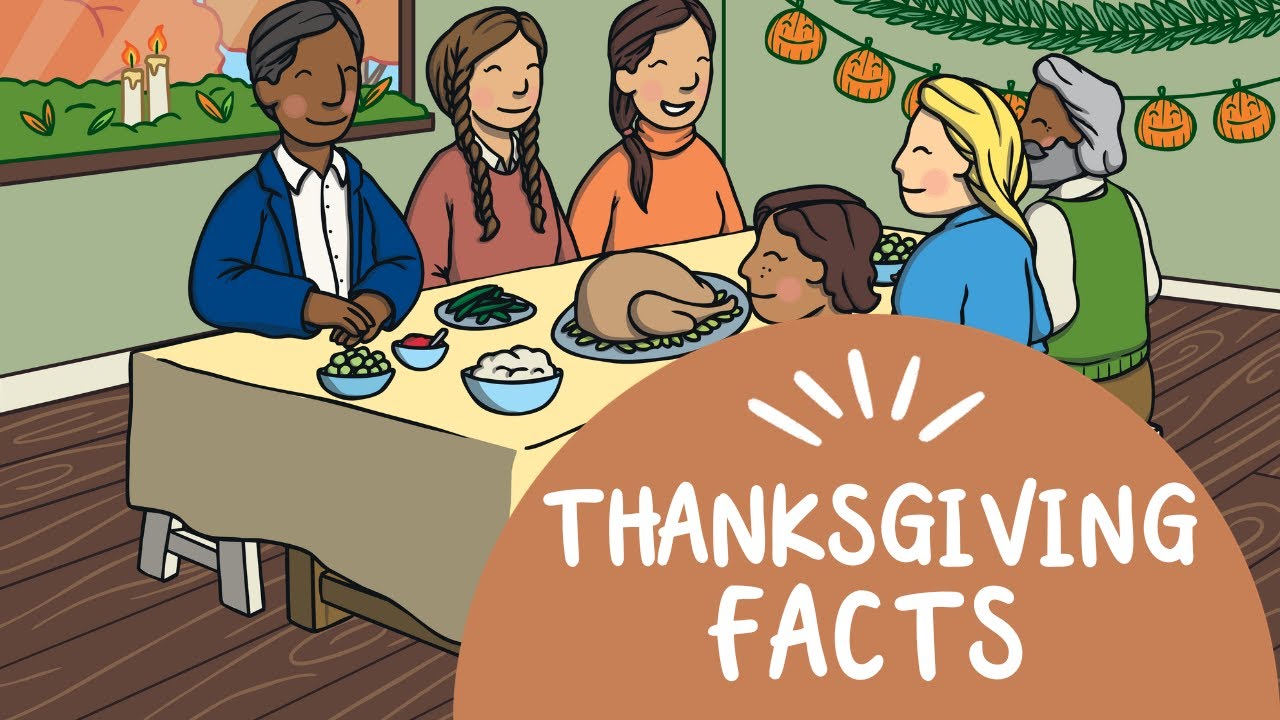
1. The first Thanksgiving was celebrated in 1621 by the Pilgrims and the Wampanoag Native Americans at Plymouth Colony in present-day Massachusetts.

2. The original Thanksgiving feast lasted for three days.

3. Venison, or deer meat, was one of the main sources of protein during the first Thanksgiving.

4. There was no turkey served at the first Thanksgiving. Instead, they enjoyed waterfowl such as ducks and geese.

5. Corn, beans, and squash were called “The Three Sisters” by Native Americans and were served during the feast.

6. Cranberries are a native fruit to North America and have been enjoyed since long before the Pilgrims arrived.

7. President George Washington declared Thursday, November 26, 1789, as the first official Thanksgiving Day.

8. Thanksgiving became an annual national holiday in the United States in 1863 when President Abraham Lincoln proclaimed it to be celebrated on the last Thursday of November.

9. Canadian Thanksgiving is celebrated on the second Monday in October, predating U.S. Thanksgiving by six years.

10. “Tom” is a common name given to male turkeys.

11. Turkeys can run as fast as 20 miles per hour!

12. Only male turkeys, called gobblers or toms, actually “gobble.” Female turkeys make a clucking sound.

13. Wild turkeys can fly and roost in trees at night.

14. Pumpkin pie is traditionally eaten on Thanksgiving but it wasn’t served during the first feast because the Pilgrims didn’t have ovens to bake pies.

15. Macy’s Thanksgiving Day Parade started in 1924 and is held annually in New York City with over 3 million people attending each year.

16. Snoopy has appeared in Macy’s Thanksgiving Day Parade more times than any other character.

17. Football has been a long-standing Thanksgiving tradition, with the first intercollegiate game played on Thanksgiving Day in 1876.

18. The annual White House turkey pardon started in 1947 with President Truman sparing the life of a turkey.

19. Each year, over 46 million turkeys are consumed on Thanksgiving Day in the U.S.

20. Minnesota is the largest turkey producer in the United States.

21. Native to North America, turkeys were taken to Europe in the early 16th century and became popular in England by the 1570s.

22. Benjamin Franklin considered the turkey noble enough to be the U.S. national bird but was outvoted by John Adams and Thomas Jefferson, who chose the bald eagle instead.

23. The wishbone tradition comes from an ancient Etruscan custom of saving the bone for good luck.

24. “Jingle Bells” was originally a Thanksgiving song composed by James Lord Pierpont in 1857 as “One Horse Open Sleigh.”

25. “Black Friday” is not directly related to Thanksgiving but has become a major shopping day that kicks off the holiday season.

26. In 1941, President Franklin D. Roosevelt signed a bill into law, permanently establishing Thanksgiving as a federal holiday on the fourth Thursday of November.

27. The heaviest turkey ever recorded was named Tyson, weighing in at 86 pounds!

28. Over 88% of Americans eat turkey on Thanksgiving Day, according to a National Turkey Federation survey.

29. Stuffing or dressing is a popular side dish made from bread, herbs, and vegetables, but regional ingredients may vary across the U.S., such as cornbread in Southern states or wild rice in Minnesota.

Actually, Sometimes It IS the Kids

Introduction:

We’ve all heard the phrase “it’s not the kids, it’s the parents,” usually thrown around when discussing behavioral issues or manners. While it is true that parents play a significant role in shaping their children’s habits, sometimes children have unique factors that influence their behavior. In this article, let’s explore how it can occasionally be attributed to the kids themselves.

Factors Affecting Children’s Behavior:

1. Temperament: Children are born with individual temperaments that influence how they respond to the world around them. Some kids may be more adaptable and easy-going, while others have a more intense reaction to new situations or changes. In some cases, these inborn traits can contribute to challenging behaviors.

2. Developmental Stages: As children grow and develop, they move through various stages that bring about different emotional and behavioral responses. For example, toddlers naturally experience tantrums as part of their development because it is one way they express frustration and assert their independence. Thus, sometimes it may be an age-specific stage contributing to a child’s behavior rather than poor parenting skills.

3. Peer Influence: As children enter school and begin forming friendships, peer influence becomes a vital factor in their behavior. Kids often mimic their friends or try to fit in with a specific group by adopting certain actions or attitudes. This peer pressure can cause kids to exhibit behavior outside of their usual character.

4. Mental Health Issues: Mental health problems like anxiety and attention deficit hyperactivity disorder (ADHD) can result in challenging behavior that isn’t related to parenting practices. In some instances, professional help is needed to address these concerns appropriately.

5. Media Consumption: Children who are exposed to violent or aggressive content in media like TV shows, movies, or video games might imitate such actions in real-life situations. Just like how adults may have differing opinions on violent content consumption, children may also react differently to exposure.

Changing Perspectives on Parenting:

Recognizing that sometimes it is the kids can help parents adjust their approach to parenting. They can then focus on understanding the unique factors that affect their child and tailor strategies to provide appropriate support and guidance.

Conclusion:

While parents have a significant influence on their children’s behavior, various factors contribute to the way kids act. These can include temperament, developmental stages, peer influence, mental health issues, and media consumption. Understanding these factors can help parents better navigate their children’s growth and development while working on a collaborative solution to address any challenges.

25 Clever Outdoor Games for Kids

Introduction

Keeping children entertained and engaged during the warmer months can be a challenge. However, with 25 clever outdoor games for kids up your sleeve, summertime (or any time) will be anything but boring. These activities are not only fun, but they’ll also encourage teamwork, creativity, and physical activity—qualities that every child can benefit from!

1. Water Balloon Toss – Fill up balloons with water and have kids toss them back and forth without letting them break. As the kids get better at catching, increase the distance between them.

2. Nature Scavenger Hunt – Compile a list of common outdoor items (such as leaves, acorns, or flowers) for children to find in your yard or nearby park.

3. Obstacle Course – Set up a backyard obstacle course using pool noodles, hula hoops, cones, or other materials.

4. Sidewalk Chalk Art Contest – Arm kids with colorful sidewalk chalk and have them create their best works of art.

5. Duck-Duck-Splash – Similar to Duck-Duck-Goose but with a small cup of water that gets splashed onto the chosen player.

6. Giant Bubbles – Create oversized bubble wands using string and dowel rods and mix a DIY giant bubble solution for hours of fun.

7. Tug-of-War – Split into teams and start pulling for the ultimate test of strength.

8. Soccer Bowling – Arrange empty plastic bottles as bowling pins and use a soccer ball to knock as many down as possible.

9. Capture the Flag – Divide children into two teams and assign each team their own territory with a flag hidden on each side; the goal is to retrieve the opposing team’s flag without being caught.

10. Hula Hoop Vortex – Participants hold hands in a circle around a hula hoop suspended by one person’s arm before attempting to get the loop around the group without breaking handholds.

11. Jump Rope Challenge – How many times can each child jump a spinning rope without missing?

12. DIY Mini-Golf – Set up a miniature golf course in your yard using household items as obstacles.

13. Potato Sack Races – Using old pillowcases or burlap sacks, have children hop to the finish line.

14. Simon Says – Have one person play “Simon” and instruct others in performing various actions, with players only responding to orders starting with “Simon Says.”

15. Flashlight Tag – Play tag at night using flashlights to identify other players.

16. Nature Bingo – Create bingo cards depicting various items found in nature, such as insects, rocks, or plants; the first child to spot and mark off a row of these items wins.

17. Lawn Twister – Use spray paint or chalk to create a twister board on the grass for an outdoor twist on this classic game.

18. Sponge Relay Races – Teams must race with a soaked sponge held between their knees and pass it along teammates without using their hands.

19. Watermelon Seed Spitting Contest – Kids test their accuracy and distance by launching watermelon seeds from their mouths (with plenty of snacks afterward).

20. Frisbee Tic-Tac-Toe – Layout 9 hula hoops in a 3×3 arrangement and have kids take turns tossing frisbees, aiming to get 3 hoops in a row filled with their frisbees first.

21. Giant Jenga – Create an oversized version of Jenga using wooden blocks for some backyard stacking fun.

22. Freeze Dance – Play music and let the kids dance until it stops—anyone caught moving is out!

23. Water Balloon Toss – A classic summertime game that will keep kids cool and entertained. Fill up balloons with water and have pairs of participants toss them back and forth. The goal is to not let the balloon burst.

24. Freeze Tag – One player is ‘it’ and chases the other players around, attempting to tag them. Once tagged, the player must ‘freeze’ in place until another player taps them to unfreeze.

25. Duck, Duck, Goose – Players sit in a circle with one person walking around the outside, tapping each person on the head and saying “duck” until they select someone as the “goose.” The goose then chases the first player around the circle, trying to tag them before they reach the goose’s spot.

We Shouldn’t Let Reading Levels Define Our Students

Introduction:

Reading levels have long been one of the primary tools used by educators to monitor the progress of their students. While these levels can indeed serve as useful benchmarks for assessing academic growth, it’s critically important that we do not allow them to define our students in terms of their potential and capabilities.

A Holistic View of Student Abilities:

Focusing solely on reading levels can lead to a limited understanding of a student’s abilities and may overshadow their strengths in other subjects or activities. When we evaluate students based on one specific measure, we risk neglecting areas in which they excel or struggle. This can result in inadequate support for their needs and hinder the development of their unique talents.

The Harmful Effects of Labeling:

Students who are categorized according to their reading level might start feeling limited, pigeonholed, or even judged because of this label. This could cause them to lose confidence in themselves and their abilities, impacting their motivation to seek learning opportunities and achieve their full potential.

Promoting a Growth Mindset:

It’s crucial that educators adopt a growth mindset when evaluating and supporting students. This means focusing on effort and progress rather than attaching fixed labels to them. By emphasizing that intelligence is not fixed but can be developed through dedication and hard work, we can inspire students to take ownership of their learning journey and become lifelong learners.

Reflections on Classroom Management:

To effectively integrate a more holistic approach into classroom management, teachers must ensure that they provide differentiated instruction to meet the diverse needs of all students. By offering multiple opportunities for success across different subjects, classroom environments can promote the idea that all students have valuable skills and abilities, even if they are not reflected in standardized assessments.

The Importance of Parental Involvement:

Parents also play a vital role in cultivating an environment where reading levels don’t define a child’s potential for success. By supporting children through encouragement and praise for effort, regardless of current level, parents can foster a child’s healthy attitude towards learning.

Conclusion:

While reading levels are certainly a valuable tool in education, it’s essential not to allow them to become the all-encompassing measure of our students’ capabilities. By embracing a holistic view of each student and fostering a growth mindset among both educators and parents, we can help ensure that no child is limited by their assigned reading level and encourage them to reach for the stars.

We’re in Love With This Recycle Drop Game to Track Recycling Progress

Introduction:

Recycling has become an essential part of daily life, as it helps to conserve resources and reduce waste. To keep people engaged and motivated, a new and exciting method to track recycling progress has emerged – the Recycle Drop Game! This game is designed to not only make recycling fun and exciting, but also to encourage individuals to make more sustainable choices in their daily lives. In this article, we will explore the aspects of the Recycle Drop Game that have captured our hearts and transformed our recycling habits.

Game Overview:

The Recycle Drop Game is an interactive mobile app that tracks players’ recycling progress by converting their actions into game-style rewards. The main goal is to encourage users to recycle more frequently and responsibly by offering incentives for correct recycling behaviors. Players can earn points by properly recycling items, which can then be used to unlock achievements, level up, and even obtain virtual rewards.

Real-Time Tracking:

One of the most appealing aspects of the Recycle Drop Game is the ability to track your recycling progress in real-time. As you recycle items, you can view your achievements on your profile. This real-time tracking system enables users to constantly stay updated on their current recycling performance. It even allows for friendly competition among friends and family members, driving further motivation to improve.

Educational Features:

To ensure that players are recycling correctly, the Recycle Drop Game provides detailed information about how each item should be properly disposed of. The game uses a visual guide and written instructions for sorting each recyclable item in accordance with local regulations. By providing educational features within a fun gaming experience, the Recycle Drop Game increases knowledge about appropriate waste management practices in a comprehensible and enjoyable manner.

Community Engagement:

The game encourages engagement not only within one’s own local community but also on a global scale. Users can engage with others by participating in weekly challenges or competing on global leaderboards. The social aspect of the Recycle Drop Game offers motivation to recycle more and make eco-friendly choices, as users work together to achieve higher scores, collaborate to overcome challenges, and compare their progress against other players’ achievements.

Conclusion:

The Recycle Drop Game has proved itself to be an innovative and enjoyable way to track recycling progress. Combining fun gameplay with educational aspects, real-time tracking, and community engagement, the game inspires users to put more effort into their recycling habits. As individuals around the world engage with this interactive game, we are hopeful for a more sustainable future where responsible waste management practices are not only encouraged but also enjoyed by all.

Polar bear facts for kids

Polar bears are one of the largest carnivorous animals in the world. They are well-known for their distinctive white fur coats and their love of the icy Arctic environment. These majestic creatures are fascination for both adults and children alike. Here we are going to share some interesting polar bear facts that are perfect for kids to learn about their favorite Arctic mammal.

  1. Polar bears are strong swimmers

Polar bears are outstanding swimmers and can swim for long distances without any break. They swim at a speed of 6mph and can keep swimming for hours, covering up to 60 miles in a day. Their large front paws, which are webbed for paddling, and their streamlined bodies, which allow them to glide through the water, are essential adaptations for their aquatic lifestyle.

  1. Polar bears are the largest land predators on Earth

Polar bears are the biggest land predators in the world. They can weigh up to 1300 pounds and can grow up to 10 feet tall. They are also taller than grizzly bears, even though their fur makes them look larger than they actually are.

  1. Polar bears are excellent hunters

Polar bears are silent hunters, and they stalk their prey using their keen sense of smell and hearing. They can smell their prey from a distance of 20 miles, even if it is under the ice. They use their powerful front paws to break the ice, and then jump into the water to catch their prey.

  1. Polar bears are not afraid of humans, but they do require respect

Despite their lack of fear of humans, polar bears should always be respected for the wild animals that they are. They can be dangerous when they feel threatened or cornered, and they are always on the lookout for a good meal.

  1. Polar bears have adapted to living in the Arctic ecosystem

Polar bears have adapted to the freezing temperatures of the Arctic by developing thick layers of fat and fur. Their round, compact bodies enable them to conserve heat and minimize the amount of skin exposed to the frigid air. They also have special adaptations in their filtration system that prevent them from getting sick when they drink saltwater from the ocean.

In conclusion, polar bears are fascinating creatures that have adapted to live in one of the harshest environments on Earth. Their unique physical attributes and hunting skills make them the perfect hunters of the Arctic. Polar bears are also exceptional swimmers that can swim over long distances. They are remarkable creatures that are a wonder to behold, and they deserve respect and admiration from all humans.

Volcano facts for kids

Volcanoes are fascinating natural wonders that have been around for millions of years. From their explosive power to their majestic beauty, volcanoes have captured the imagination of people of all ages. But what exactly are volcanoes, how do they form, and what are some of the most interesting facts about them? Here are some facts about volcanoes for kids to learn about.

What are Volcanoes?

A volcano is a mountain or hill that has a vent or opening through which molten rock, ash, and gas escape from the Earth’s interior. The term “volcano” comes from the Roman god of fire, Vulcan. There are over 1,500 active volcanoes on Earth, and many more that are dormant or extinct. Most of these volcanoes are located along the so-called “Ring of Fire,” which encircles the Pacific Ocean.

How do Volcanoes Form?

Volcanoes form when magma, which is molten rock beneath the Earth’s surface, rises up through the Earth’s crust and erupts onto the surface. The magma can come from deep inside the Earth’s mantle or from the melting of the Earth’s crust. When the magma reaches the surface, it cools and solidifies, forming igneous rocks such as basalt or granite. Over time, this process can build up a large cone-shaped mountain of rock around the vent.

Interesting Volcano Facts

  1. The tallest volcano in the solar system is on Mars. Olympus Mons is over 13 miles high, making it over three times taller than Mount Everest.
  2. The largest volcano on Earth is Mauna Loa in Hawaii, which rises over 30,000 feet from the ocean floor to its summit.
  3. The deadliest volcanic eruption in history was the eruption of Mount Tambora in Indonesia in 1815. The eruption killed over 71,000 people.
  4. Volcanoes can erupt in different ways, such as explosions, lava flows, or ash clouds.
  5. The gas released during volcanic eruptions can sometimes create beautiful sunsets because it reflects light in unique ways.
  6. Volcanoes can also create new land, such as the Hawaiian Islands, which were formed by underwater volcanic eruptions.
  7. Not all volcanoes are mountains. Some volcanoes, like the ones that create hot springs or geysers, are found on flat ground.
  8. The word “volcano” is sometimes used to describe someone who is very passionate or explosive.

Conclusion

Volcanoes are amazing natural wonders that can be both beautiful and destructive. Learning about volcanoes can teach kids about Earth’s geology and the power of nature. With a better understanding of the science behind volcanoes, kids can appreciate the incredible forces that shape our planet.

Moon facts for kids


The moon is an object that has fascinated humans for centuries. It is the fifth largest moon in the Solar System, and it orbits around the Earth every 27.3 days. Here are some interesting facts about the moon that kids would enjoy knowing

  1. The surface of the moon is covered in impact craters. These craters were created by asteroids and comets crashing into the moon’s surface.
  2. The moon has no atmosphere, so there is no weather on the moon. The temperature on the moon can be very hot during the day and very cold at night.
  3. The moon has phases which change every 29.5 days. These phases are caused by the moon’s position relative to the sun and Earth.
  4. The moon is the only natural satellite of Earth. A satellite is an object that orbits around a planet.
  5. The gravity on the moon is only one-sixth of the gravity on Earth. This means that if you weighed 60 kilograms on Earth, you would only weigh 10 kilograms on the moon.
  6. The first person to step on the moon was Neil Armstrong, on July 20, 1969. He famously said, “That’s one small step for man, one giant leap for mankind.”
  7. The moon is believed to have been formed about 4.5 billion years ago, shortly after the birth of the Solar System.
  8. The moon is slowly moving away from the Earth. It moves about 3.8 centimeters away from the Earth every year.
  9. The moon has no magnetic field, which means it is exposed to the full force of the solar wind. This can cause the moon’s surface to become charged with electrostatic energy.
  10. The moon is a popular subject for poets, artists, and writers. Its beauty and mystery have inspired countless works of art and literature throughout history.

In conclusion, the moon is a fascinating object that has captivated the imaginations of people for centuries. It is a unique natural satellite that has many interesting features and characteristics that kids will enjoy learning about.

Earth day jokes for kids

It’s that time of year again where we celebrate our beautiful planet Earth! And what better way to celebrate than with some Earth Day jokes for kids. Not only are they funny, but they also spread awareness about our planet and how we can all do our part to protect it.

  1. What do you call an alligator in a polluted lake?

An eau de gator!

  1. What did one tree say to the other?

“I’m rooting for you!”

  1. How does the ocean say hello to the shore?

It waves!

  1. Why did the tomato turn red?

Because it saw the salad dressing!

  1. Why was the math book sad?

Because it had too many problems.

  1. Why did the banana go to the doctor?

Because it wasn’t peeling well.

  1. How do you know if it’s raining cats and dogs?

You step in a poodle!

  1. What do you call a fake noodle?

An impasta.

  1. What’s a tree’s favorite drink?

 Root beer!

  1. Why did the chicken cross the playground?

To get to the other slide!

These silly and fun jokes not only make us laugh but are a great way to teach kids about the importance of taking care of our planet. By celebrating Earth Day, we can all learn new ways to protect the environment and make a positive impact for future generations to come. So let’s get out there and make our planet proud!